CFD Analysis of Microfluidic Devices for Human Cardiac Organoids
Overview
While vascularized human cardiac organoids are typically maintained under static conditions, this environment fails to provide the defined flow exposure and consistent convective exchange necessary for mature tissue development. To address this, this project focuses on the design and computational fluid dynamics (CFD) analysis of a microfluidic channel specifically engineered to house and perfuse cardiac organoids.
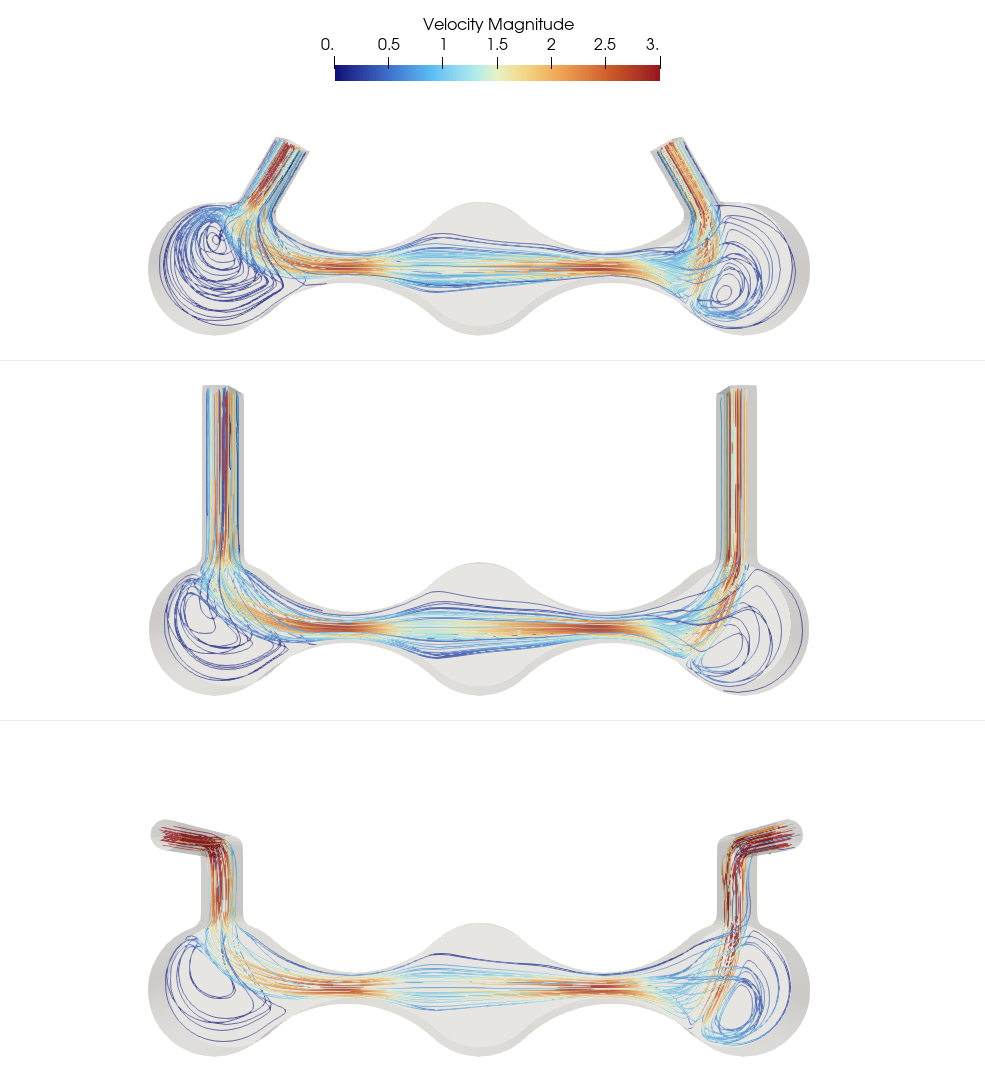
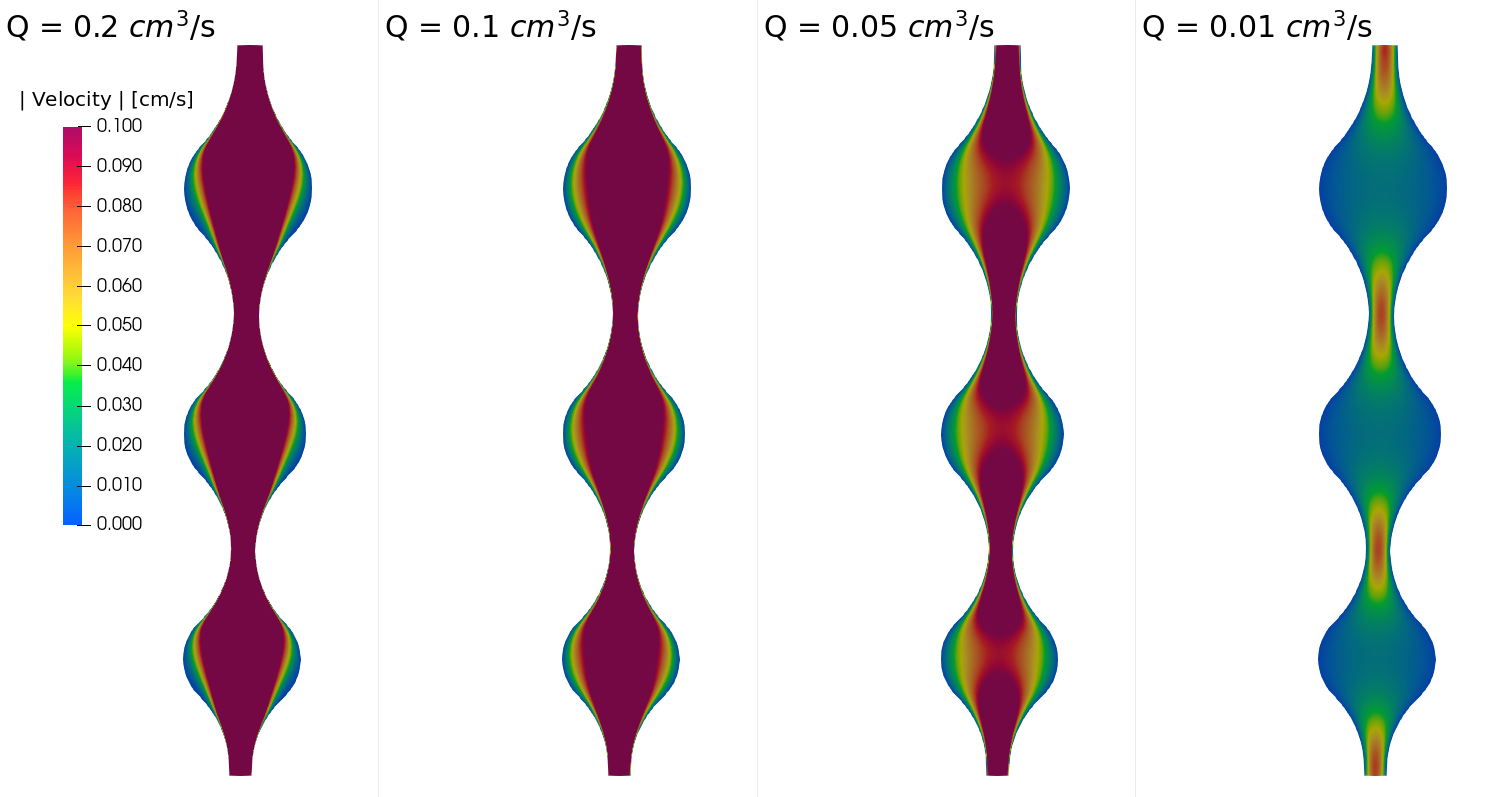
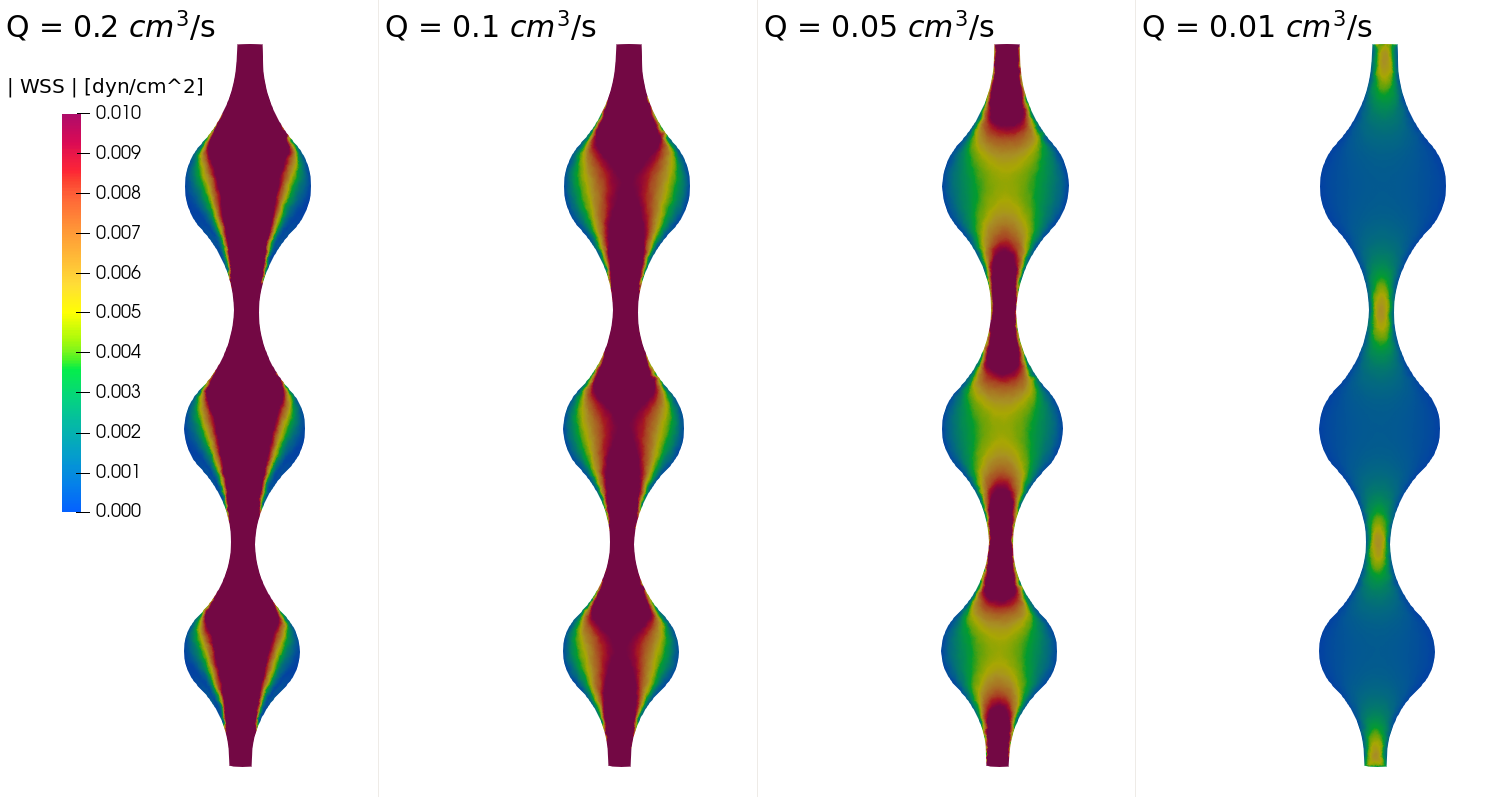
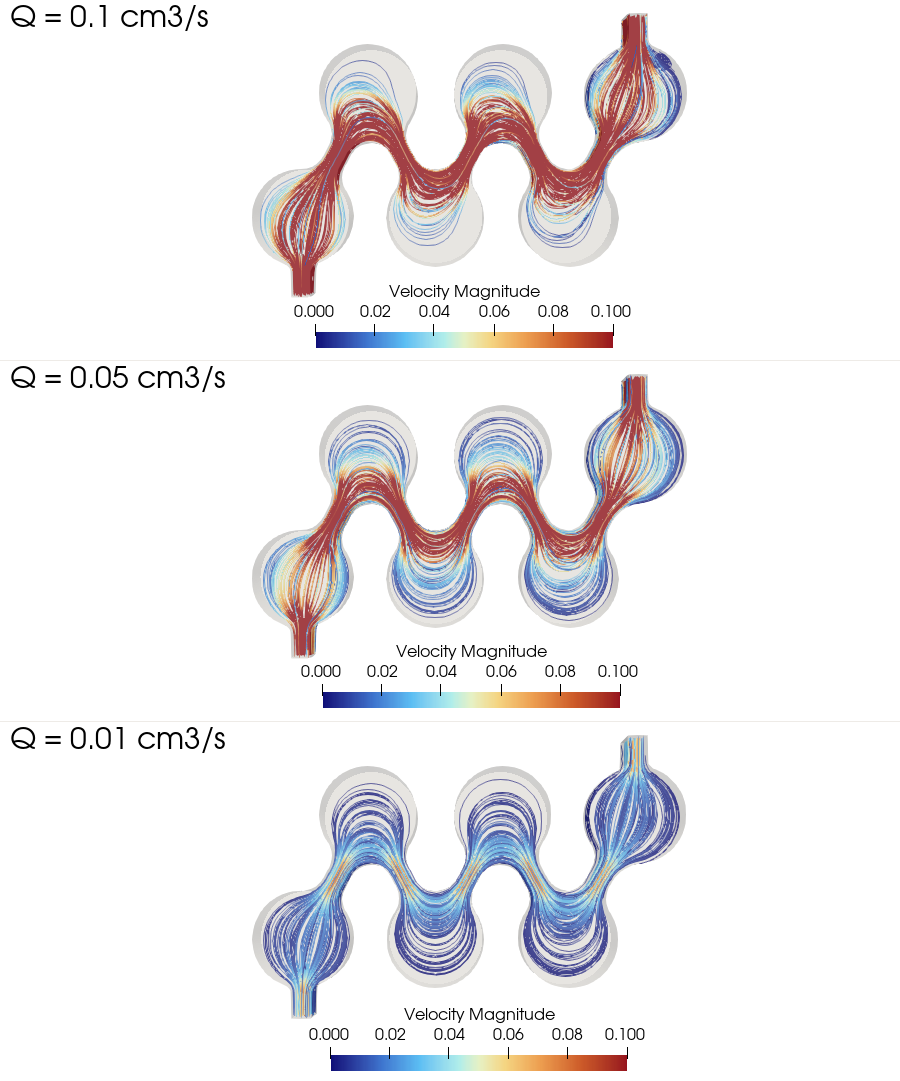
My primary role centered on the end-to-end computational pipeline. I utilized Autodesk Fusion for the 3D computer-aided design (CAD) of the microfluidic channels and organoid holders. To prepare these complex geometries for simulation, I employed open-source tools including TetGen, PyMeshFix, VTK, and VMTK for robust mesh generation and topological fixing. Finally, I conducted high-fidelity, finite element method (FEM) based simulations using svMultiPhysics. By parametrically varying the inlet and outlet channel orientations, the central well diameters, and the number of organoid holders within the well, I was able to systematically analyze the resulting flow fields and extract wall shear stress profiles across the different geometric configurations.
The Importance of Wall Shear Stress in Organoid Development
Quantifying wall shear stress (WSS) is not just a fluid dynamics exercise; it is a critical driver of biological development. The developing human heart is fundamentally shaped by hemodynamic forces. Both cardiomyocytes and endothelial cells actively respond to flow-driven shear cues and convective transport, which directly influence vascular morphogenesis, metabolic state, and overall functional output.
Across various engineered tissue systems, introducing controlled flow has been shown to expand endothelial populations, sustain long-term tissue maintenance, and reduce structural variability. By accurately quantifying the WSS on the organoid holders, we can precisely tune the microfluidic device to provide the optimal mechanobiological signaling required to reshape organoid physiology and enhance their functional performance.
Results
Developed a complete, open-source-driven computational pipeline from 3D CAD modeling and mesh generation to FEM-based CFD simulation for microfluidic devices.
Quantified wall shear stress distributions and convective flow patterns across diverse channel configurations, orientations, and well diameters.
Identified the optimal geometric parameters for the organoid holders to ensure consistent and physiologically relevant shear cues.
Provided the crucial hemodynamic data needed to transition human cardiac organoids from static cultures to dynamically perfused environments, directly supporting flow-induced vascular network remodeling.
Visualizations